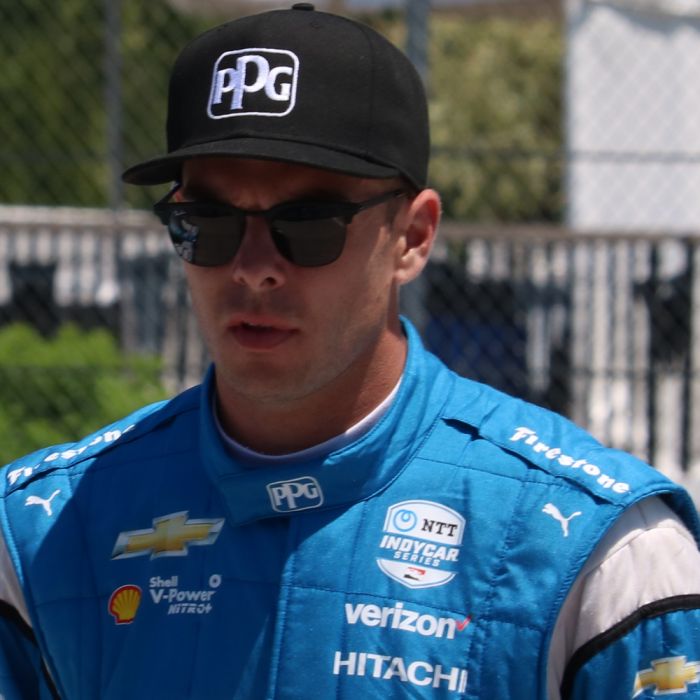
Scott McLaughlin's transition from Australian Supercars champion to IndyCar rookie represents one of the most intriguing career pivots in contemporary motorsport. The 30-year-old New Zealander has made the bold leap from touring car supremacy to open-wheel competition, joining the prestigious Team Penske IndyCar program behind the wheel of the #3 machine.
Born on June 10, 1993, McLaughlin's meteoric rise through the ranks began in his homeland's domestic touring car scene. His precocious talent was evident from the outset – in 2011, at just 17 years old, he became the youngest driver ever to win a race in the New Zealand Touring Car Championship. This early success served as a launching pad for what would become a remarkable career trajectory.
The following year, McLaughlin captured the inaugural New Zealand V8SuperTourers Championship in 2012, establishing himself as the country's premier touring car talent. His performances caught the attention of Australian teams, leading to his full-time Supercars Championship debut with Garry Rogers Motorsport in 2013.

By the Numbers
McLaughlin's impact in Australia's premier motorsport category was immediate and historic. During his maiden full-time season, he secured his first Supercars race victory at Pukekohe Park Raceway – fittingly, on home soil in New Zealand. In doing so, he etched his name in the record books as the youngest person ever to win a Supercars race, underlining the exceptional nature of his talent.
Career Journey

The defining chapter of McLaughlin's career came through his association with DJR Team Penske, where he piloted the iconic #17 Ford FG X Falcon. His partnership with the team reached its zenith in 2018 when he clinched the Supercars Championship – his first major touring car title and a crowning achievement that validated years of promise and potential.
Championship Implications
This championship victory was particularly significant as it demonstrated McLaughlin's ability to perform under the intense pressure of a season-long campaign. His combination of raw pace, tactical intelligence, and mechanical sympathy made him a formidable competitor across the diverse range of circuits that comprise the Supercars calendar.
The success with DJR Team Penske inevitably led to opportunities beyond Australia's shores. The Penske organization, with its rich history in American open-wheel racing and multiple Indianapolis 500 victories, recognized McLaughlin's potential to adapt his skills to IndyCar competition. This mutual attraction culminated in his recruitment to the Team Penske IndyCar program.
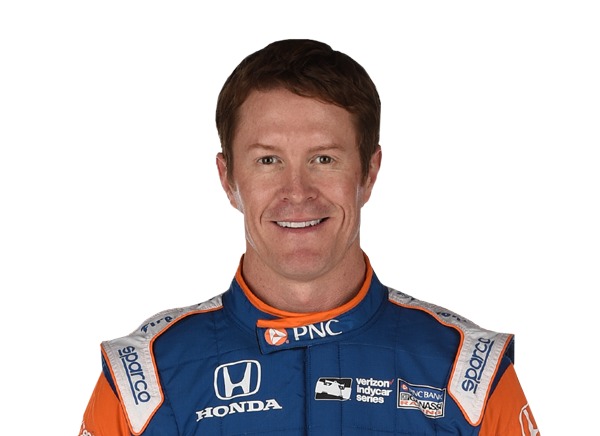
Now competing in the #3 car, McLaughlin faces the considerable challenge of mastering one of motorsport's most demanding disciplines. IndyCar racing presents a stark contrast to his touring car background – from the aerodynamic complexity of open-wheel machinery to the variety of oval, road course, and street circuit competitions that define the series.
The transition from touring cars to IndyCar is notoriously difficult, requiring drivers to completely recalibrate their approach to vehicle dynamics, racecraft, and circuit-specific techniques. Oval racing, in particular, presents a unique challenge for drivers without extensive open-wheel experience, demanding precise car control at sustained high speeds in close quarters.
However, McLaughlin brings several advantageous qualities to this transition. His proven ability to adapt to different machinery was evident throughout his Supercars career, where regulation changes and technical developments required constant evolution. His analytical approach to setup work and his capacity to provide detailed feedback to engineers – skills honed over years of touring car competition – should serve him well in the technically sophisticated IndyCar environment.
The Team Penske environment provides an optimal platform for McLaughlin's IndyCar education. The organization's wealth of experience, championship-winning heritage, and technical resources offer the support structure necessary for a successful transition. The team's track record of developing drivers and maximizing their potential creates realistic expectations for McLaughlin's growth trajectory in the series.
Currently, McLaughlin's IndyCar statistics reflect the early stages of his open-wheel journey, with his focus necessarily on learning and development rather than immediate results. The absence of wins, podiums, or pole positions in his current tally is typical for drivers making such a significant category transition, and these metrics should be viewed within the context of his adaptation process.
The broader significance of McLaughlin's IndyCar move extends beyond personal career progression. His presence helps maintain the series' international character and provides inspiration for drivers from touring car backgrounds who might consider similar transitions. His journey also strengthens the connection between American and Australasian motorsport communities.
Looking ahead, McLaughlin's IndyCar trajectory will be closely watched by motorsport observers worldwide. His combination of natural talent, championship experience, and determination to succeed in a new discipline creates compelling narrative potential. While the learning curve remains steep, his track record suggests that adaptation and eventual competitiveness are realistic expectations.